An automated contact center is transforming the way businesses support and engage their customers. In today’s fast-paced environment, Contact center AI in the digital era is enabling companies to deliver smarter, faster, and more personalized service. By leveraging AI-powered omnichannel contact center solutions, organizations can combine intelligent routing, self-service tools, and AI insights to boost customer satisfaction, reduce costs, and empower agents to focus on high-value interactions.
This guide walks through what an automated contact center is, how it works, the key benefits, and practical steps to implement one successfully in your organization.
To ensure an automated contact center runs smoothly, businesses need access to technology systems that can handle complex customer service tasks. Using powerful infrastructure helps AI process large volumes of requests quickly, reducing delays and improving service. Similarly, keeping up with the latest computing tools for faster and more reliable data processing enables companies to adapt to increasing customer demands while supporting intelligent automation.
On the marketing side, aligning support with effective long-term online marketing strategies to attract and retain customers helps create a seamless customer experience. Companies can also use methods for combining digital marketing insights with customer service processes to better anticipate customer needs and increase satisfaction across channels.
Financial planning is crucial for managing AI-driven operations. Leveraging resources for careful financial management when investing in AI technologies ensures that organizations can implement an automated contact center without overspending, maximizing both efficiency and ROI.
By combining technology, marketing strategies, and sound financial planning, businesses can create a system where human agents focus on meaningful interactions while AI handles repetitive tasks. An automated contact center supported by these elements delivers faster responses, higher satisfaction, and a smarter, more personalized service experience.
Top 10 Automated Contact Center Solutions to Improve Customer Experience
An automated contact center is essential for businesses looking to streamline customer support, improve response times, and reduce operational costs. The following list highlights top providers offering AI-driven and omnichannel solutions to enhance customer engagement.
1. Bright Pattern: Comprehensive AI Contact Center Platform
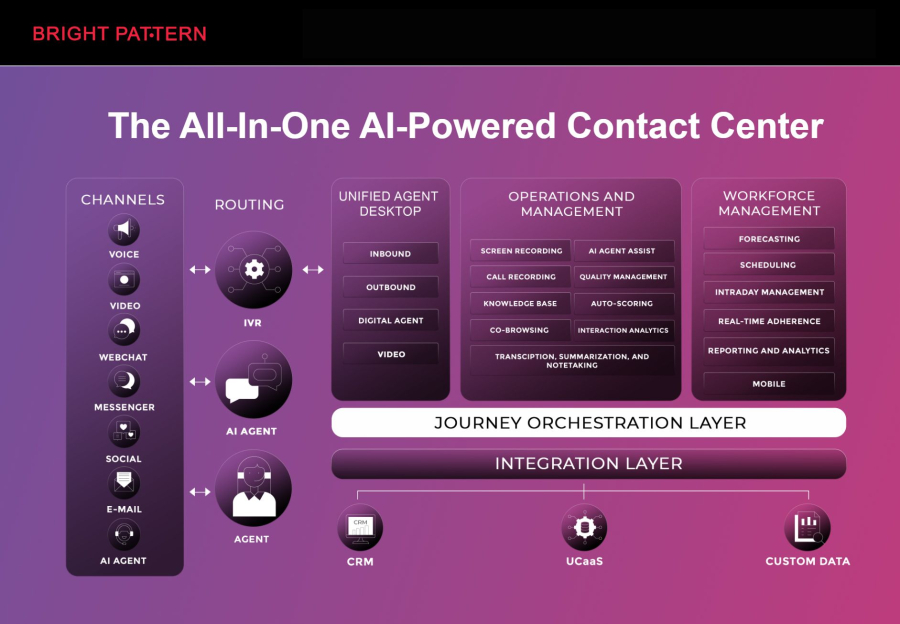
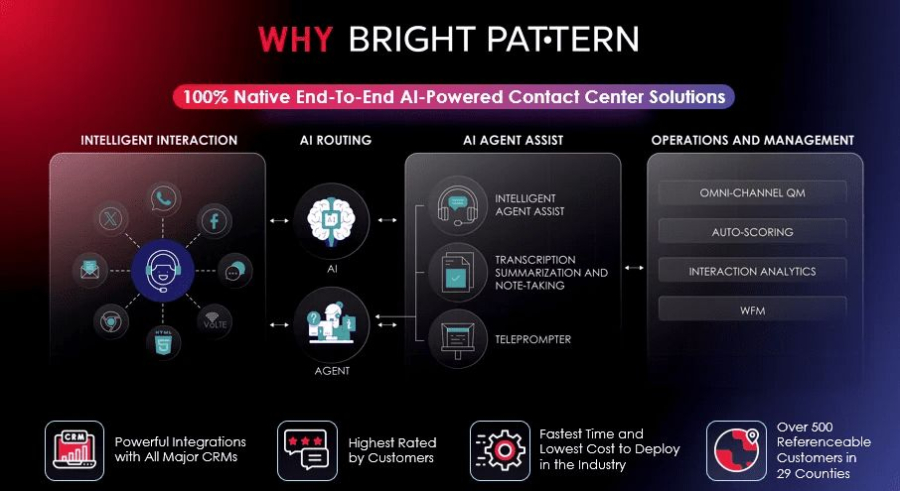
Bright Pattern leads the market with its AI-powered contact center software that supports multiple communication channels seamlessly. Designed for businesses of all sizes, it enables companies to deliver personalized customer interactions while automating repetitive tasks.
Key features include:
- Intelligent routing to connect customers with the right agent quickly
- AI-assisted self-service and chatbots for faster problem resolution
- Omnichannel support across voice, chat, email, SMS, and social media
- Real-time analytics to monitor performance and improve agent efficiency
- Easy integration with CRM systems and business applications
Bright Pattern’s automated contact center solutions help organizations reduce call handling times, enhance agent productivity, and deliver a consistent customer experience across channels.
2. Five9: Cloud Contact Center Software
Five9 offers AI-driven solutions for inbound, outbound, and blended contact centers. It focuses on predictive dialing, automation, and real-time analytics to improve agent performance and customer satisfaction.
3. Genesys Cloud CX: Omnichannel Contact Center
Genesys provides cloud-based contact center solutions that integrate AI, workforce management, and customer journey mapping. Its platform helps companies deliver personalized experiences and seamless support across channels.
4. Talkdesk: AI-Powered Customer Engagement
Talkdesk combines cloud contact center capabilities with AI to streamline workflows and reduce response times. Key features include intelligent routing, virtual agents, and in-depth reporting.
5. NICE inContact CXone: Customer Experience Cloud
CXone offers a scalable automated contact center solution with AI-powered analytics, workforce optimization, and omnichannel engagement, helping businesses enhance customer satisfaction and reduce operational costs.
6. RingCentral Contact Center: Cloud-Based Contact Management
RingCentral provides AI-assisted tools for omnichannel communications, call routing, and analytics. The platform helps businesses manage interactions efficiently while improving customer experiences.
7. 8x8 Contact Center: Unified Communications and AI
8x8 offers AI-enhanced contact center software for seamless communication across channels. Features include predictive routing, speech analytics, and automated reporting.
8. Vonage Contact Center: Cloud Communications Platform
Vonage delivers a cloud contact center solution with AI-powered automation, omnichannel support, and integration capabilities that improve agent efficiency and customer satisfaction.
9. LiveAgent: Multichannel Help Desk Software
LiveAgent focuses on ticketing, chat, and call center functionality, combining automation and AI to streamline support workflows and improve response times for businesses of all sizes.
10. Freshdesk Contact Center: AI-Driven Support Platform
Freshdesk provides automated tools for ticketing, chat, and voice support. AI-powered features like virtual agents and smart workflows help teams resolve queries faster and maintain high customer satisfaction.
What Is an Automated Contact Center?
An automated contact center is a modern customer service hub that uses technology to handle a significant portion of customer inquiries without human intervention. It connects channels like voice, email, chat, messaging apps, and social media, and uses automation to route, respond, and resolve issues efficiently.
Instead of relying only on live agents answering every call, an automated contact center uses tools such as:
- Interactive voice response (IVR) systems that guide callers through menus and perform self-service actions.
- AI powered chatbots and virtual agents that answer routine questions in natural language.
- Automated workflows that update systems, send confirmations, and trigger follow up actions.
- Intelligent routing engines that match each contact to the best available agent or automated resource.
The result is a more scalable, consistent, and cost efficient customer experience, where humans and automation work together instead of competing.
Key Components of an Automated Contact Center
A successful automated contact center is built from several tightly integrated components. Each piece adds a layer of intelligence or efficiency.
1. Intelligent IVR and Voice Automation
Interactive voice responsesystems handle inbound phone calls before they reach a human agent. In a modern automated contact center, IVR is more than a simple numbered menu.
- Speech recognitionallows customers to speak in natural language instead of pressing keys.
- Authentication flowsverify identity using account numbers, one time passcodes, or caller data.
- Self service actionslike checking balances, updating contact details, or making simple changes are handled instantly.
- Smart routingtransfers callers with context to the right agent if human support is needed.
This automation shortens queues, reduces handle times, and ensures that when an agent joins the call, they already know who the customer is and why they are calling.
2. AI Powered Virtual Agents and Chatbots
Virtual agents and chatbots are automated assistants that interact with customers via web chat, in app messaging, social channels, or even voice.
- Natural language understandinghelps the bot interpret customer intent instead of relying only on rigid menus.
- Guided conversationswalk customers through frequent tasks such as order tracking, appointment booking, or troubleshooting.
- Escalation to humansoccurs automatically when the issue is complex or the customer asks for an agent.
- Continuous learningfrom real interactions improves accuracy and coverage over time.
When designed well, AI powered bots can resolve a large share of repetitive questions, significantly reducing wait times and freeing agents for more complex, relationship driven work.
3. Omnichannel Routing and Queuing
Modern customers do not limit themselves to a single channel. They expect to reach you where it is most convenient for them. An automated contact center usesomnichannel routingto manage this complexity.
- Incoming contacts from voice, chat, email, and messaging are all fed into a unified queue.
- Routing rules consider priority, customer value, language, skills required, and agent availability.
- Automation decides whether to send the interaction to a bot, self service flow, or human agent.
- Context and history follow the customer, so they do not need to repeat themselves when switching channels.
This creates a smoother, more professional experience and ensures that high priority issues receive attention first.
4. Knowledge Base and Self Service Portals
A strongknowledge baseis the backbone of any automated contact center. It fuels both human agents and automated systems with accurate information.
- Articles, FAQs, and step by step guides answer common questions.
- Search and recommendation engines surface the right content quickly.
- Portals and help centers allow customers to solve issues independently, at any time.
- Agents use the same content to provide consistent responses across the team.
When the knowledge base is current and well organized, both self service and assisted service become faster and more reliable.
5. Automation Workflows and Integrations
Automation is most powerful when it connects your contact center to the rest of your business. Workflow engines and integrations help your automated contact center act on information, not just display it.
- Integrations with CRM, billing, and order systems provide a full view of each customer.
- Automated workflows update records, create cases, and send notifications without manual steps.
- Event triggered messages keep customers informed about status changes, renewals, or follow ups.
- Business rules ensure consistent handling of refunds, escalations, and approvals.
These background automations reduce manual data entry, lower error rates, and speed up end to end resolution.
6. Analytics, Reporting, and Quality Management
Because so many steps are automated and instrumented, an automated contact center generates rich data. Analytics tools turn this data into practical insight.
- Real time dashboardsshow queues, service levels, and system health.
- Historical reportstrack volumes, handle times, and automation success rates.
- Quality monitoringreviews interactions for compliance and customer sentiment.
- Feedback loopsidentify where to improve IVR flows, bot dialogues, or routing rules.
With clear visibility, leaders can tune automation to maximize both efficiency and customer satisfaction.
Business Benefits of an Automated Contact Center
The right automation strategy delivers value on several fronts. Organizations typically see benefits across cost, customer experience, and employee satisfaction.
1. 24 7 Service Without 24 7 Staffing
Automated systems never sleep. Self service portals, IVR, and chatbots can handle a large portion of requests outside traditional business hours.
- Customers get answers at any time, even on weekends and holidays.
- Simple tasks like password resets, order tracking, and appointment changes run automatically.
- Night and off peak shifts can be staffed more lightly, because automation absorbs predictable volume.
This combination improves accessibility while keeping labor costs under control.
2. Lower Operating Costs and Higher Efficiency
By automating routine tasks, an automated contact center reduces the number of interactions that require a live agent, and shortens those that do.
- Deflectionmoves common questions to self service channels, reducing inbound load.
- Shorter average handle timecomes from pre collected information and automated verification.
- Fewer transfersoccur because intelligent routing sends contacts to the right place the first time.
- Streamlined back office workeliminates manual updates and repetitive actions.
These efficiencies often translate into meaningful cost savings while supporting higher customer volumes.
3. Faster Response and Resolution Times
Customers notice speed. Automation helps you respond quickly, even during spikes in demand.
- Automated acknowledgment messages reassure customers that their request has been received.
- IVR and bots resolve simple issues instantly, bypassing the queue.
- Routing engines reduce idle time and distribute work fairly across agents.
- Integrations let agents access the right information without switching between multiple systems.
The result is shorter wait times, quicker resolutions, and a more reliable experience overall.
4. Consistent, High Quality Interactions
Automated contact centers promote consistency by encoding your best practices directly into the system.
- Standardized scripts and flows ensure that policies are followed every time.
- Knowledge base content is reused across channels for unified answers.
- Automation reduces the impact of individual differences in agent experience.
- Built in checks catch missing data or incomplete steps before a case is closed.
This consistency strengthens your brand and makes it easier to maintain high quality at scale.
5. Happier, More Productive Agents
Automation is not only about replacing manual work. It is also about creating better conditions for human agents.
- Agents spend less time on repetitive, low value tasks and more on meaningful problem solving.
- Clear context from automated systems reduces research time and guesswork.
- Workload is balanced more fairly, minimizing burnout and frustration.
- Data driven coaching helps agents develop skills and recognize successes.
Engaged agents deliver better service, creating a positive cycle that benefits both customers and the business.
6. Easy Scalability for Growth and Peak Seasons
When demand grows, a traditional contact center must rapidly hire, train, and equip more agents. An automated contact center scales more smoothly.
- Self service and bots can handle increasing volumes with minimal additional cost.
- Cloud based tools can be adjusted to handle seasonal peaks without permanent overhead.
- Automation workflows can be cloned and adapted quickly for new products or services.
This flexibility supports both rapid growth and predictable seasonal surges without sacrificing service quality.
Automated vs Traditional Contact Center: A Comparison
The table below highlights how an automated contact center differs from a traditional, agent centric model.
Aspect | Traditional Contact Center | Automated Contact Center |
Service Hours | Limited to staffed hours | 24 7 self service with targeted live support |
Handling of Routine Queries | Mostly handled by agents | Handled primarily by IVR, bots, and portals |
Scalability | Requires proportional hiring | Automation absorbs large portions of extra volume |
Customer Experience | Varies by agent skill and availability | More consistent, faster for common issues |
Data and Insights | Fragmented, manual reporting | Rich, real time analytics across channels |
Agent Role | Handle every type of inquiry | Focus on complex, high value interactions |
Customer Journey Improvements with Automation
An automated contact center can enhance every step of the customer journey, from pre sales questions to post purchase support.
Before Purchase
- Chatbots answer product questions quickly, boosting confidence to buy.
- Automated callbacks let prospects request a convenient time to speak with sales.
- Guided flows help customers choose plans or configurations that match their needs.
During Onboarding
- Automated welcome journeys share tutorials, tips, and key next steps.
- Self service setup wizards reduce the need for live assistance.
- Proactive outreach checks in with new customers and offers help if they get stuck.
Ongoing Support
- Instant status updates on orders, deliveries, and service tickets.
- Renewal and upgrade reminders triggered at the right moments.
- Personalized recommendations based on previous interactions.
At each stage, automation removes friction and makes it easier for customers to accomplish their goals.
Common Use Cases for an Automated Contact Center
Practical, high impact use cases are the best way to introduce automation. Here are examples that many organizations adopt first.
- Account and order self servicesuch as checking balances, tracking deliveries, and updating details.
- Password and access resetswith secure verification and automatic system updates.
- Appointment scheduling and changesincluding reminders and confirmations.
- Service status updatesfor outages, maintenance, or known issues.
- Intelligent triagethat gathers key information before routing to the right queue.
- Proactive notificationsabout renewals, deadlines, or follow up steps.
These workflows deliver measurable value quickly, making them ideal starting points for automation projects.
Key Metrics for Measuring Automation Success
To manage an automated contact center effectively, it is essential to track the right metrics and align them with your business goals.
- Containment rateThe percentage of interactions fully resolved without human intervention.
- Average handle timefor both automated and agent handled contacts.
- First contact resolutionto gauge how often customers get a complete answer on their first attempt.
- Customer satisfaction scoresfrom surveys after both automated and assisted interactions.
- Service level and response timesacross channels.
- Cost per contactbefore and after automation rollout.
By monitoring these indicators, you can tune your automated contact center to balance efficiency with customer experience.
Steps to Implement an Automated Contact Center
Implementing automation is most successful when planned thoughtfully and rolled out in stages. The following steps provide a practical roadmap.
1. Define Clear Objectives
Start by clarifying what you want to achieve. Examples include:
- Reducing average wait time by a specific percentage.
- Increasing self service usage for targeted tasks.
- Improving customer satisfaction for certain journeys.
- Supporting growth without linear increases in staffing.
Well defined goals guide your design decisions and help you measure success.
2. Map Customer Journeys and Identify Pain Points
Document how customers currently interact with your support channels, from their perspective.
- List the most frequent reasons for contact.
- Note where customers encounter delays or confusion.
- Highlight moments where agents perform repetitive steps.
These insights reveal where automation can make the biggest positive impact quickly.
3. Prioritize High Value, Low Complexity Use Cases
Rather than automating everything at once, choose a small set of use cases that are:
- Very frequent or time consuming.
- Relatively simple and rule based.
- Low risk if the automation needs adjustments.
Examples often include order tracking, password resets, and appointment management.
4. Design Conversations and Flows with the Customer in Mind
Design IVR menus, chatbot dialogues, and self service screens around how customers naturally think and speak.
- Use clear language and avoid internal jargon.
- Offer simple choices and limit unnecessary steps.
- Provide easy escape routes to a human agent when needed.
- Test flows with real users and refine them based on feedback.
Customer centric design keeps automation helpful and prevents frustration.
5. Integrate with Core Systems
Automation is far more powerful when it can read and update data in your existing platforms.
- Connect your automated contact center to CRM, billing, and ticketing systems.
- Ensure data security and access controls are in place.
- Automate back office processes that follow customer interactions.
With strong integrations, customers see up to date information and agents avoid repetitive manual work.
6. Pilot, Measure, and Iterate
Launch new automation capabilities to a limited audience or for a limited set of journeys first.
- Monitor usage, completion rates, and satisfaction scores.
- Identify where customers drop out or request human help.
- Refine wording, choices, and logic based on real behavior.
This iterative approach reduces risk and produces automation that genuinely serves customers.
7. Scale and Continuously Improve
Once initial flows are performing well, extend automation to additional use cases and channels.
- Leverage what you have learned to design new journeys.
- Regularly review metrics and customer comments.
- Update knowledge base articles and scripts as products or policies evolve.
An automated contact center is not a one time project. It is a long term capability that grows with your business.
Best Practices for a High Performing Automated Contact Center
Organizations that get the most from automation tend to follow a set of proven best practices.
- Keep the human option visibleso customers always know they can reach a person if needed.
- Use plain, friendly languageto make automated interactions feel approachable.
- Personalize when appropriateusing known data to tailor responses.
- Test across devices and channelsto ensure a smooth experience everywhere.
- Train agents on automation featuresso they can complement and improve them.
- Protect privacy and securityespecially during authentication and data updates.
- Celebrate quick winsto build internal support for continued investment in automation.
The Future of Automated Contact Centers
Automation in contact centers is advancing rapidly, driven by improvements in artificial intelligence and customer expectations.
- More natural conversationsas language models improve understanding and generation of human like responses.
- Predictive supportthat anticipates customer needs before they reach out.
- Deeper personalizationbased on behavior, preferences, and history.
- Tighter collaborationbetween bots and agents, with automation suggesting next best actions in real time.
Organizations that invest now in building an automated contact center foundation will be better positioned to adopt these innovations quickly and stay ahead of rising customer expectations.
Conclusion
An automated contact center is far more than a collection of tools. It is a strategic shift toward smarter, more scalable customer service. By combining IVR, virtual agents, omnichannel routing, self service, and integrated workflows, you can deliver faster answers, lower costs, and a more consistent experience across every touchpoint.
When implemented thoughtfully, automation does not replace the human element. Instead, it amplifies your team, allowing agents to focus where they add the most value while routine work is handled automatically. The result is a contact center that delights customers, empowers employees, and supports sustainable growth.
